Keeping 32,000 Chickens Safe: How Wattbox Transformed a Shropshire Farm

Visiting Neville's farm in Shropshire
When we visited Neville’s farm in rural Shropshire, it was clear that an operation this large needed power they could rely on. The family farm—once focused on cattle and sheep—has evolved into a modern poultry unit housing 32,000 laying hens across two large sheds. For 18 months, each flock produces eggs that supply local markets before being moved on for by-products.
But beneath the calm, efficient exterior lies a constant pressure point: keeping the power on. And that’s exactly why Neville decided it was time to take back control of his energy system.
Built for the Power Demands of Poultry Farming
Running a poultry farm at this scale demands reliable and uninterrupted electricity. Energy doesn’t just keep the lights on, it keeps the feeding lines moving, the egg equipment running, and most critically, it keeps the heating system operating.
Those fans are life support. In summer, if they stop, Neville estimates the chickens could die within 30–45 minutes.
The financial risk is huge, not just the birds themselves. When you factor in feed, running costs, and lost production, the potential exposure skyrockets. Even a conservative estimate puts the total at £150,000 – £250,000 in value at risk from a single extended outage. And that doesn’t include:
- The time and cost of restocking flocks
- Downtime while sheds are cleaned and reset
- Lost revenue from eggs not produced during the outage
In that context, the Wattbox isn’t just a battery—it’s insurance against catastrophic loss. It ensures that the farm keeps running even when the grid fails, protecting both livestock and livelihood.
Farm Energy at a Glance
⚡ Peak Electricity Use (Summer)
280 kW per day
High cooling demand to keep sheds at safe temperatures. Even a short power outage can become critical very quickly.
💷 Potential Financial Risk During an Outage - £150,000/£250,000
Covers potential livestock losses, lost egg production, feed waste, and equipment downtime. Power reliability isn’t optional — it protects the entire business.
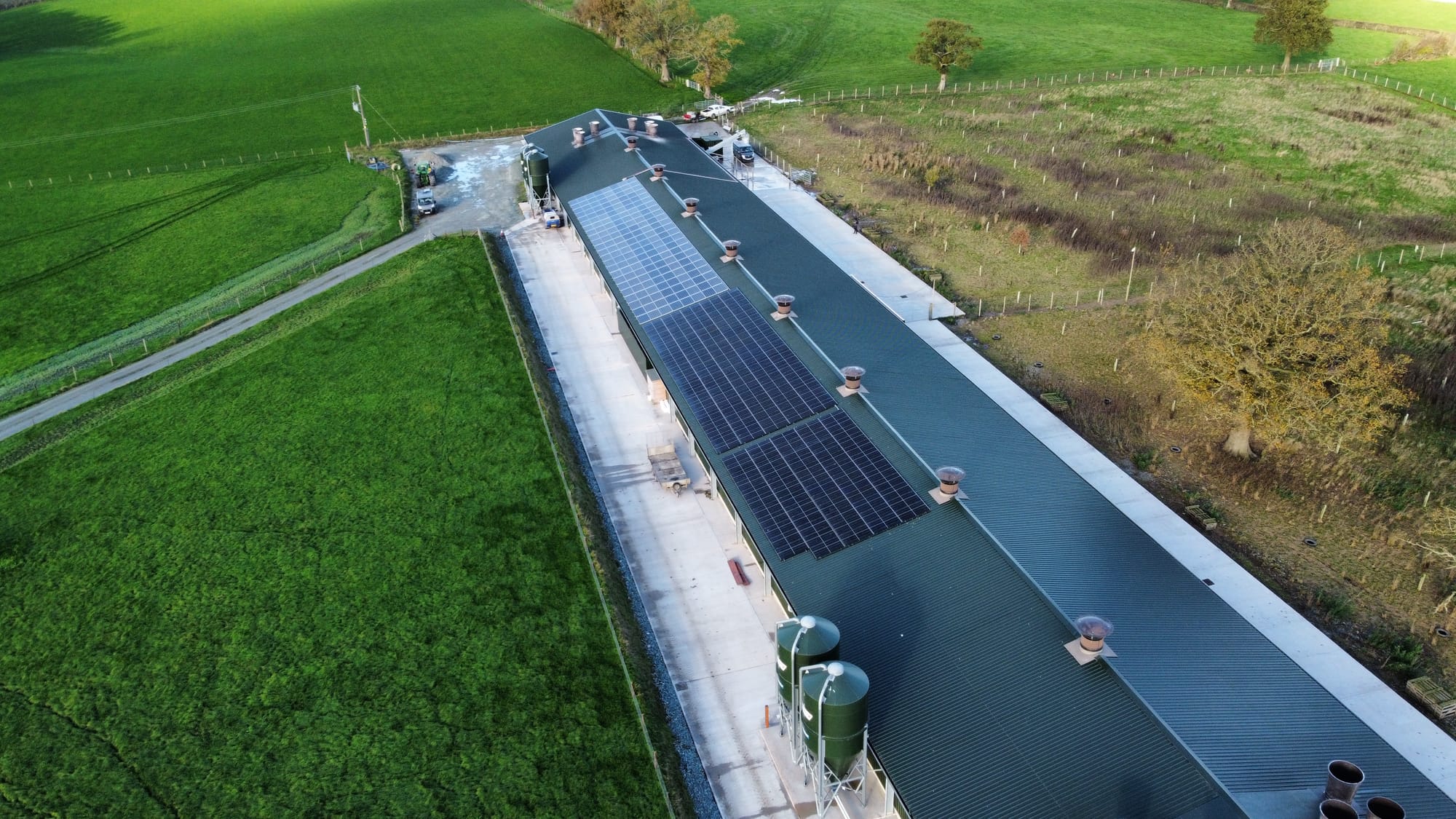
☀️ Solar Array - 100 kW system installed
Generates plenty of electricity, especially in summer. Without storage, much of this energy is exported cheaply to the grid.
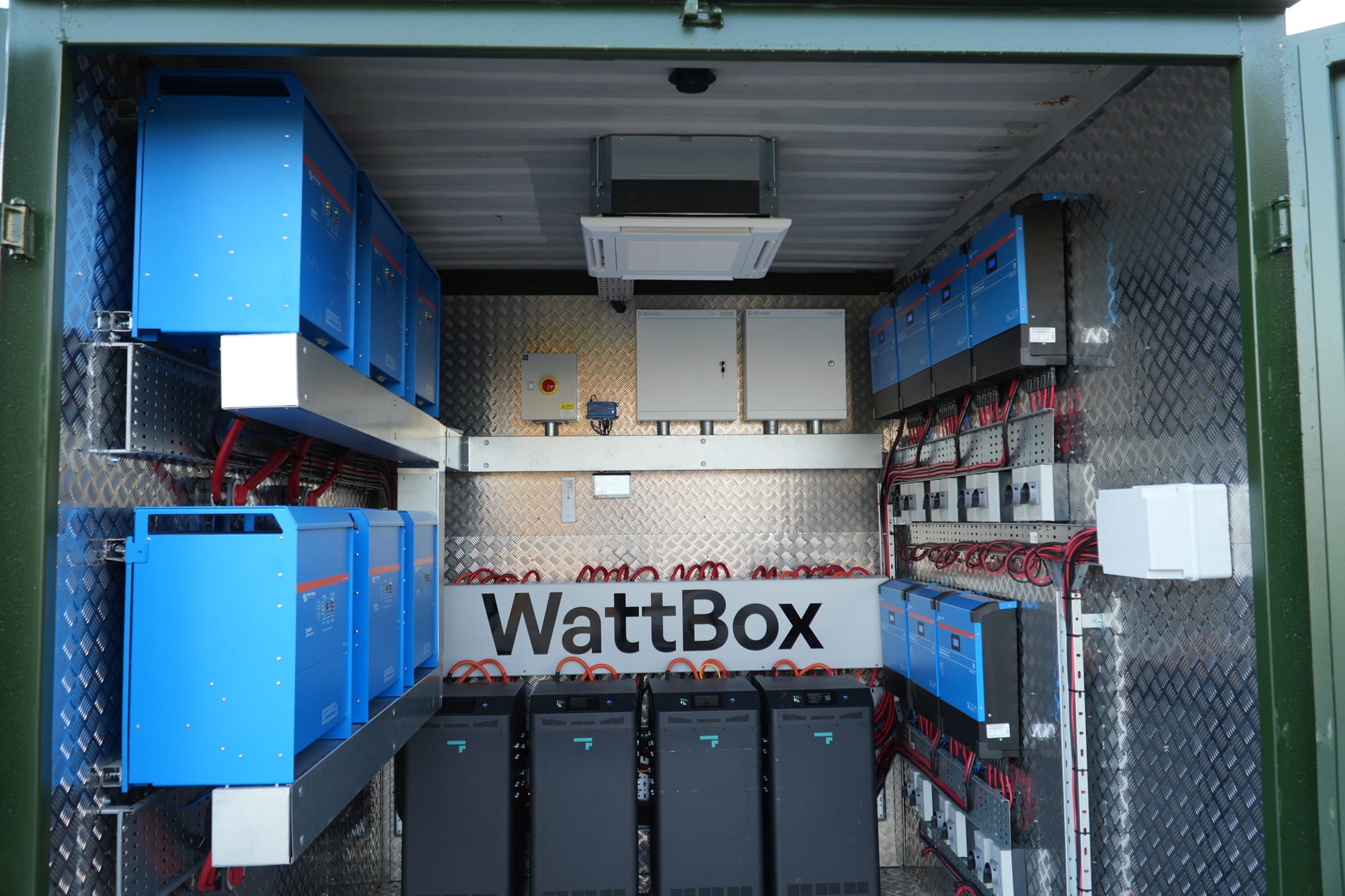
🔋 Battery Storage (WattBox) - 128 kWh capacity
Stores excess solar energy during the day so it can be used later — when the farm actually needs it.
🔌 Battery Output Capacity - 72 kW discharge power
Enough to run critical systems during peak demand periods or short outages.
🛠 Backup Supply - 3-phase 100A connection + generator
The generator acts as a final safety net. With battery storage in place, generator use is reduced — saving fuel and maintenance costs.
🐔 Critical Systems Powered
- Ventilation fans
- Heating
- Feeding lines
- Egg collection systems
These systems protect livestock welfare and safeguard farm income.
Key Takeaway: Neville’s farm runs on high-stakes energy. Wattbox provides control, resilience, and savings—turning solar and backup systems into a coordinated, reliable solution.
The Problem: Solar Alone Wasn’t Enough
Like many farmers, Neville invested in solar thinking it would shield him from rising electricity costs. Instead, he discovered the financial imbalance:
- He sells power for 6p per kWh
- He buys power back at 26p per kWh
With peak usage hitting ~280 kW/day in summer, he was generating plenty—but couldn’t store or use it efficiently. As he put it, he felt he had “been sold hopes and dreams,” and the solar alone “felt like a bag of tricks.”
What he needed wasn’t more panels. He needed control.
Why Neville Chose Wattbox
In Neville’s eyes, the initial solar installation on his farm has fell short, to combat this, Neville has just invested in solar upgrades and a Wattbox installation. In Neville’s case, he wants to get his system right second time round, this is something we aim to get first time round with all Wattbox installations.
Though the technology is complex, Wattbox delivers simple, practical benefits:
- Store solar instead of exporting it for pennies
- Use stored energy instead of buying it at 26p
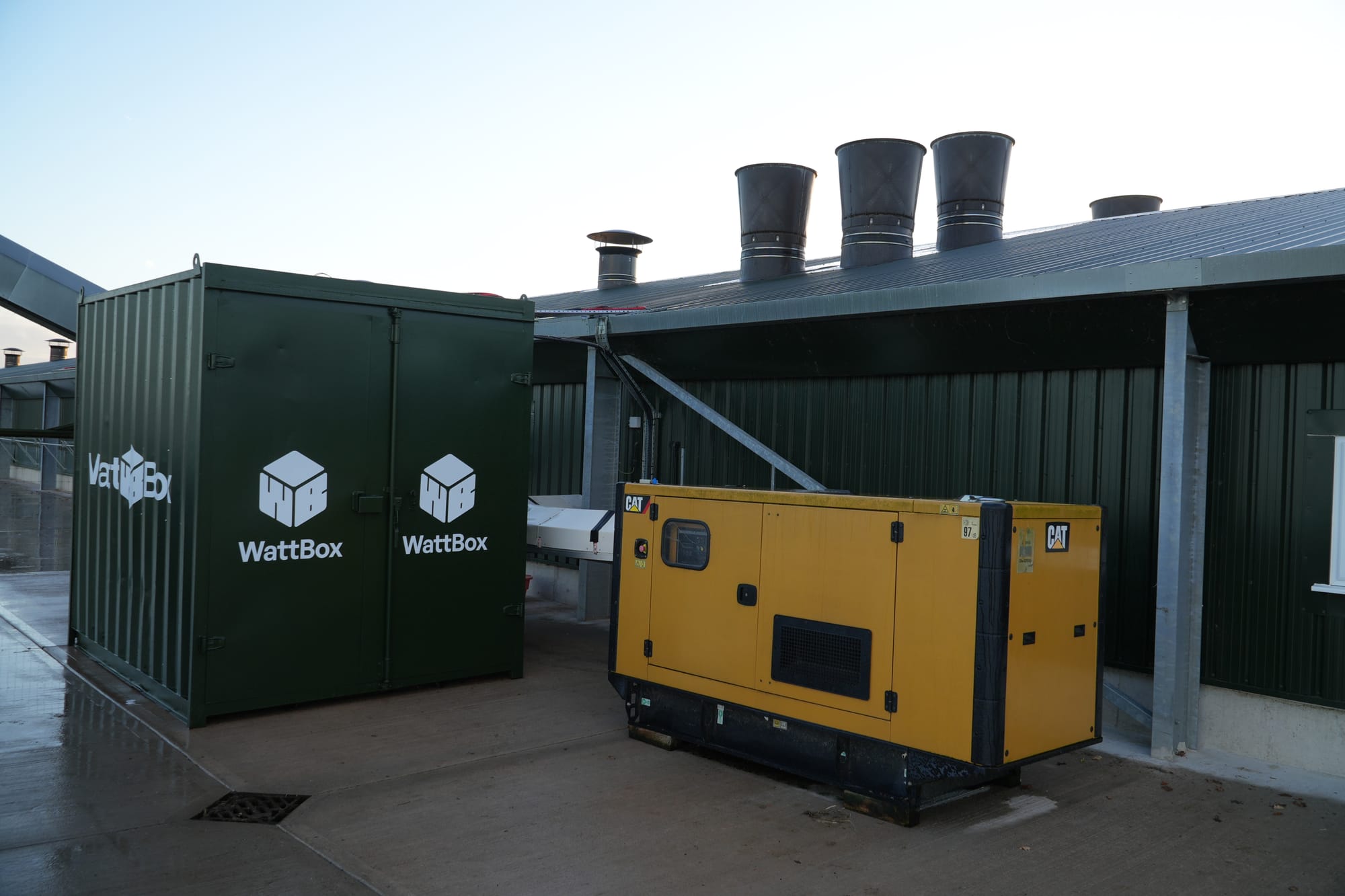
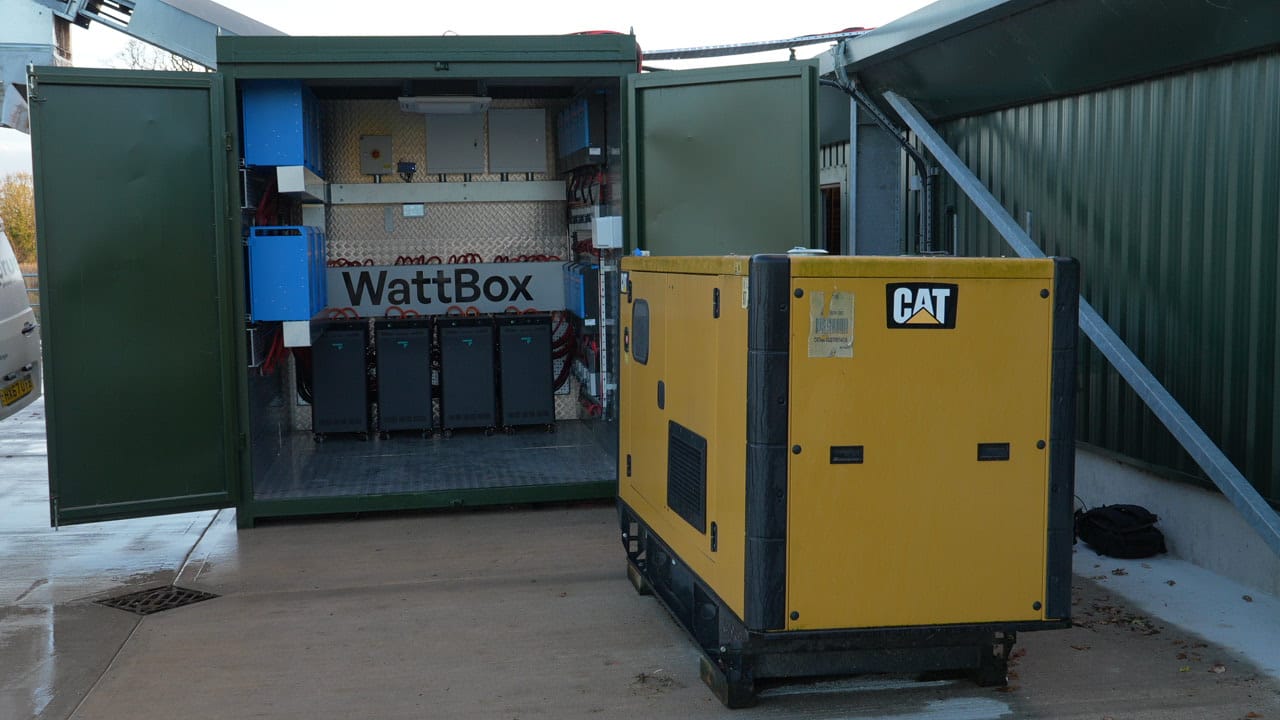
- Charge the batteries with his existing CAT diesel generator generator if needed
- Optimise when to buy, store and use energy. Use when prices are high, recharge when prices are low.
- Reduce reliance on a rural grid that can be unpredictable
For the first time, Neville can match his highest generation with his highest demand, which happens to be in the summer months when cooling is critical.
Wattbox Specification for This Farm
This installation was designed specifically for the high, temperature-sensitive load of a poultry farm.
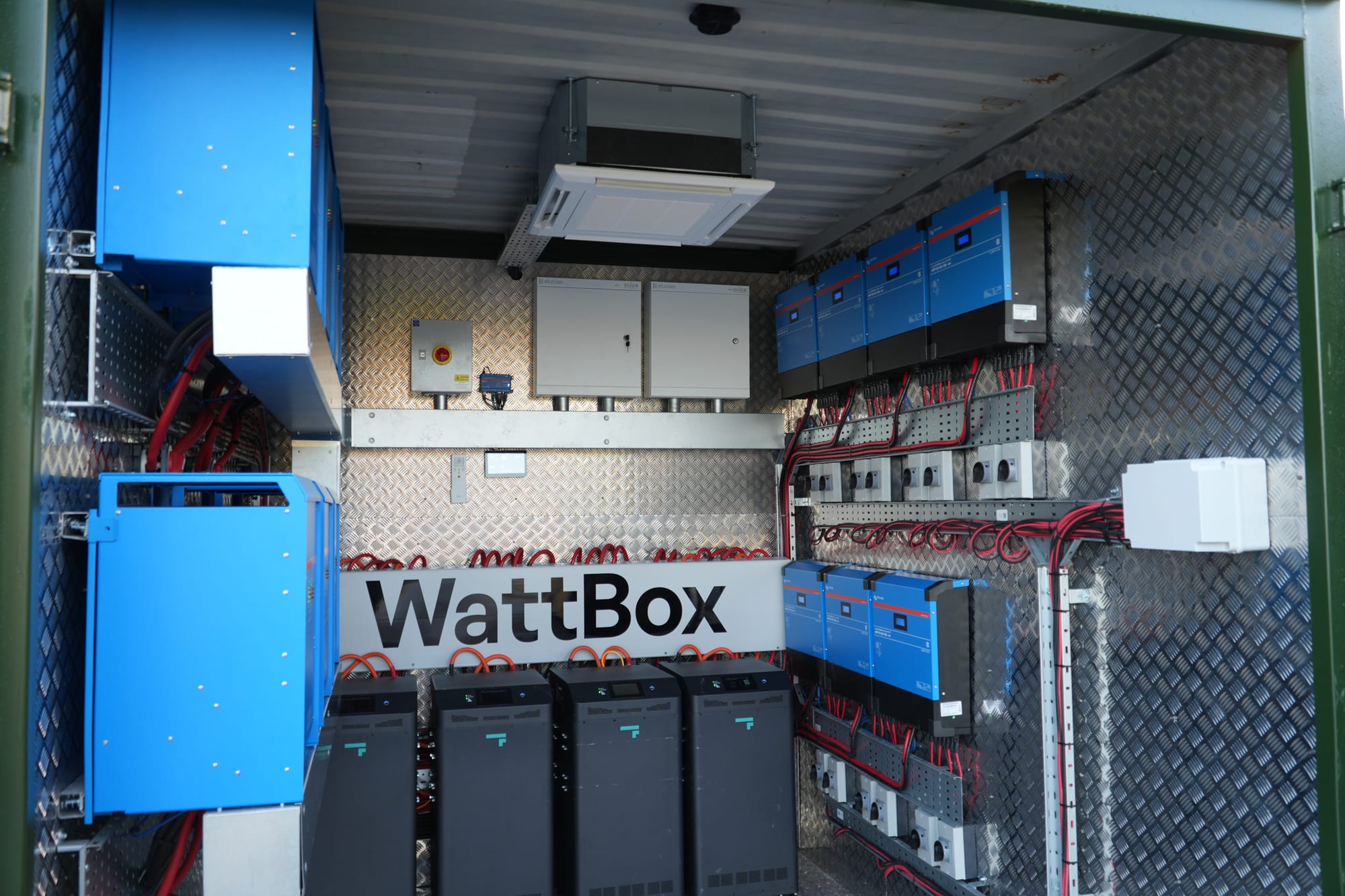
WattBox Spec (for this install):
- 3-phase 100A supply
- 128 kWh battery storage
- 72 kW output capacity
- 100 kW solar array
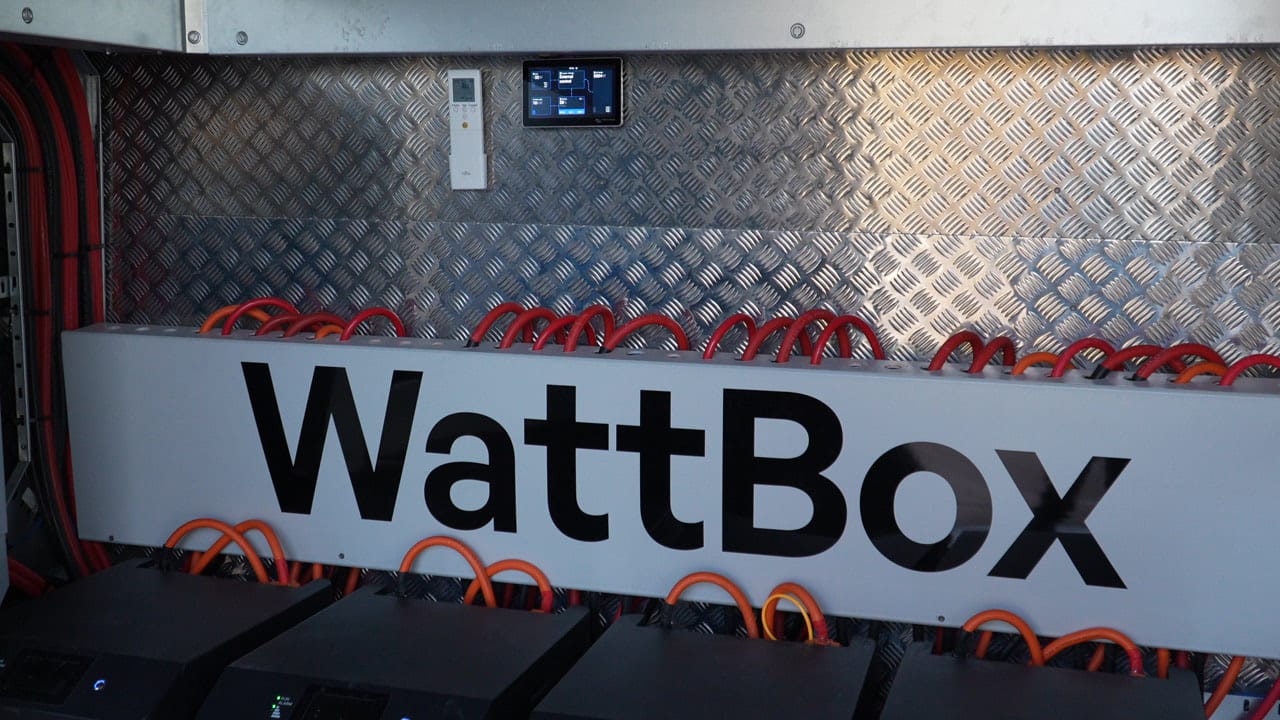
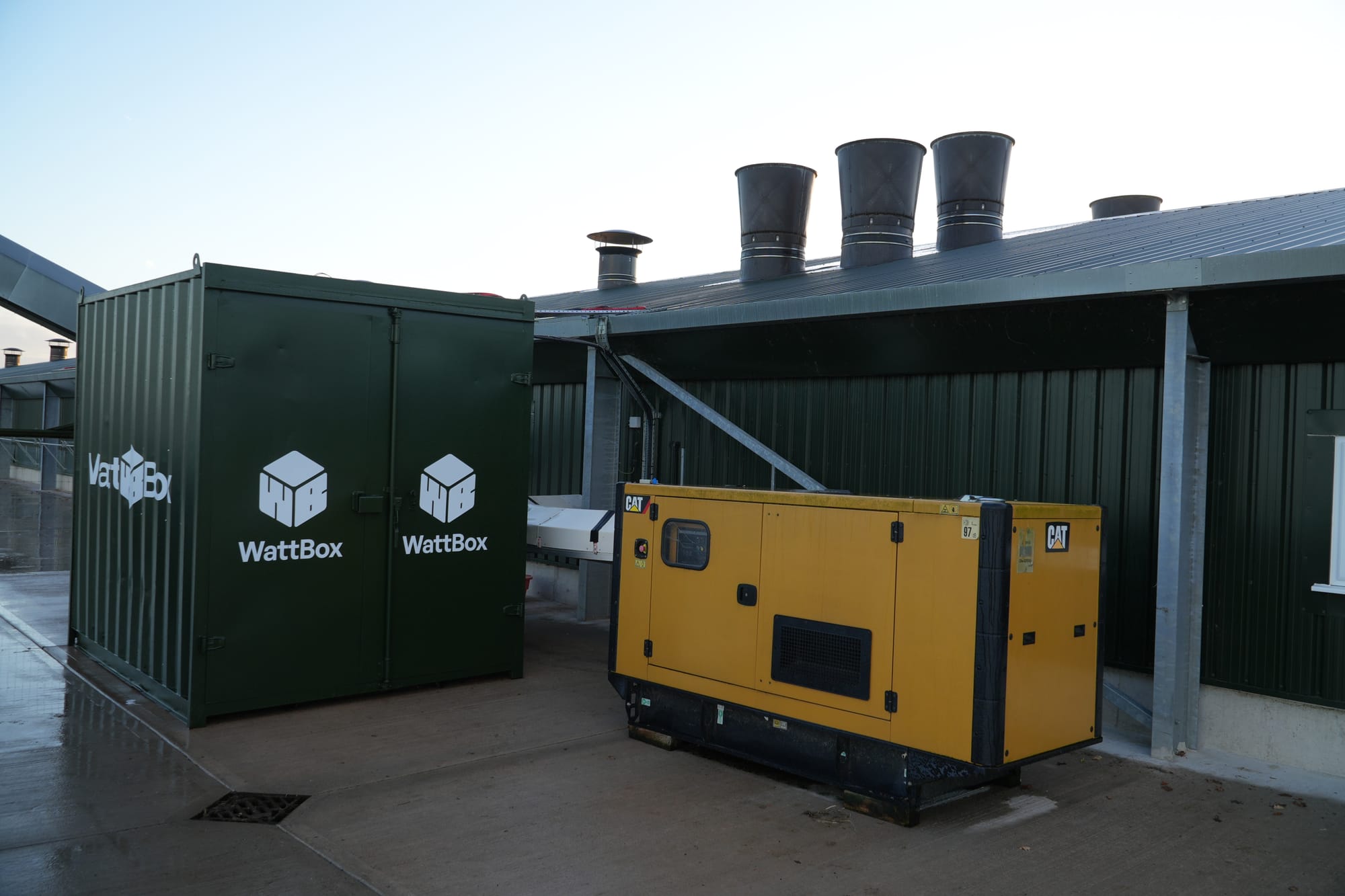
- System housed in a 10ft shipping container
This combination gives Neville both power security and the flexibility to adapt to future tariff changes or expansion plans. One benefit of poultry farms such as Neville’s is they have a large amount of roof space so the possibility to add more solar in the future is there. As well as this, if we think Neville’s farm can benefit from a bigger Wattbox with a larger capacity, as well as more solar panels, then we can increase the size of his Wattbox as soon as Neville wants to proceed.
Generator Savings & Efficiency
Neville already had a backup generator, which he would run during outages or voltage dips. With Wattbox in place:
- The generator will run far less often
- Fuel costs drop
- Maintenance intervals stretch further
- The lifespan of the generator is extended
Wattbox essentially becomes the first line of defence, with the generator acting only as a last resort. This creates a much more stress free business.
Before the Wattbox when there was an outage, Neville would have to manually turn on his generator. So what happens if there is a power and nobody is there to turn on the generator in time? Now, if an outage happens the system will automatically run directly off of the solar and batteries. Only once the batteries charge drops to 20% then the generator will automatically kick in to keep batteries charge and the farm running.
Before the Wattbox was installed, Neville would have had to run the generate 24/7 when there was a power outage. Now he just runs it to fully charge the batteries and then the wattBox takes over. This will help reduce his fuel usage and save even more money.
Smarter Use of Tariffs and Energy Storage
The 128 kWh of storage doesn’t just store sunshine. In future, Neville could:
- Charge overnight from the grid at cheaper rates
- Use stored energy during expensive peak periods
- Smooth out peak loads that might otherwise trigger higher commercial charges
This adds a powerful additional savings mechanism on top of solar storage benefits.
Neville’s current situationSolar power often produces excess energy in summer and too little in winter. Neville is currently on a flat-rate plan, but once his contract ends, we’ll switch him to a time-of-use tariff. That way, when winter evening rates are low, we can fully charge his batteries and use that stored energy during the higher daytime peak.
Strengthening His Position with Buyers
Egg buyers—from supermarkets to wholesalers—are increasingly interested in sustainability and low-carbon supply chains. Wattbox enables Neville to showcase:
- On-site solar
- Reduced grid dependence
- Lower carbon footprint
- Resilience against outages
A “solar-powered egg” story could give him a competitive edge and appeal to environmentally-conscious consumers.
A Long-Term Case Study: 6–12 Months of Data
Neville is happy for us to use his farm as a case study, for him, this is about understanding and optimising performance over time:
- How well does the system perform?
- How much money does it actually save?
- When is the best time to buy, sell, or store energy?
- How can the system be optimised seasonally?
We’ll track performance for 6–12 months to provide a complete picture and help Neville make data-driven decisions.
Looking Ahead — Securing the Farm’s Future
Neville’s story highlights a growing trend: farmers who invested in solar expecting stability, only to find the economics didn’t match expectations. Wattbox changes that by offering:
- Energy security
- Financial predictability
- True independence from an unreliable grid
- Protection for both livestock and revenue
- Flexibility for future expansion
For the first time in years, Neville feels he’s moving toward a farm that’s powered on his terms—safe, efficient, and resilient.
How the Wattbox Installation Process Worked for Neville
Bringing a Wattbox system onto a working farm has been designed to be straightforward, transparent, and disruption-free. Here’s what the journey to Neville’s farm looked like.
1. Initial Phone Call
Everything starts with a simple conversation. We learn about the farm, current electricity usage, existing solar or generator, and—importantly—review recent energy bills. This helps us understand the challenges and identify opportunities right away.
2. Instant Rough Quote
From that first call, we provide a quick, no-nonsense estimate. This allows farmers to immediately see:
- Where the quick wins are
- How much solar generation is currently being wasted, or how much is needed
- What level of savings or protection a Wattbox could deliver
This gives a clear sense of whether the project is worth pursuing long before any commitment.
3. On-Site Visit
Next, we arrange a convenient site visit. Our engineers review:
- Load requirements
- Existing electrical infrastructure
- Shed layout and equipment
- Space for the container and any solar upgrades
This ensures the final system is built around the realities of the farm—not a generic template.
4. System Finalisation & DNO Approval
Once the design is agreed, we take care of all the technical paperwork:
- Final system specification
- DNO (Distribution Network Operator) grid application
- Compliance checks and permissions
This is fully handled by us, keeping the process simple and stress-free.
5. Installation & Commissioning
When everything is approved, the Wattbox is installed and brought online.
Installations are planned around farm routines, and in most cases can be completed with minimal to zero downtime—keeping sheds running safely throughout the process.
For Neville’s farm, we installed the Wattbox in his down time when he was cleaning out his farm and there was no active poultry there, this worked out to be the best time for Neville.
6. Start Saving Immediately
From day one, the system begins:
- Storing solar instead of exporting it
- Reducing grid imports
- Cutting generator hours
- Protecting the farm from outages
Savings and resilience start the moment the system is switched on.
7. Ongoing Monitoring & Check-Ins
We don’t walk away after installation. We continue to monitor performance, provide optimisation advice, and check in regularly—especially as the seasons change. The goal is to make sure the system always delivers maximum value.
In Conclusion
Neville’s experience reflects a growing shift in British farming: solar alone isn’t enough to deliver true energy security or meaningful financial savings. By pairing upgraded solar with a Wattbox system, he’s gained control over when and how his energy is used—protecting his livestock, stabilising his costs, and reducing dependence on an unreliable rural grid.
If you’re interested in discovering how Wattbox could make a real difference on your farm—reducing energy costs, improving resilience, and protecting your livestock—get in touch with us today. We’ll walk you through the process, provide a no-obligation assessment, and show you how a tailored energy solution can work for your operation.