
How a Touring Circus Swapped its 24/7 Diesel Generator for 300kWh of Silent Battery Storage
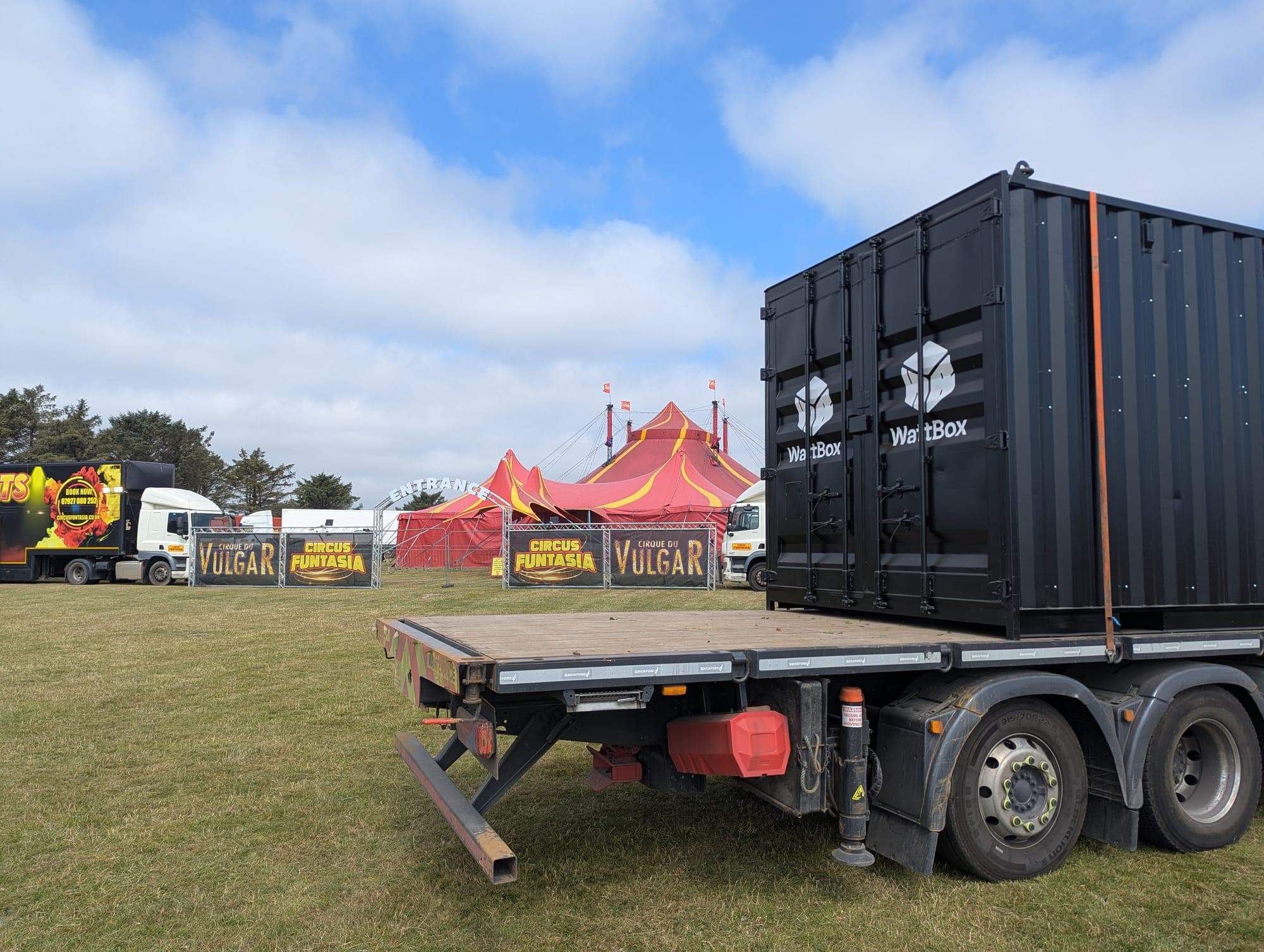
This article is aimed at event organisers, site managers, and anyone running off-grid temporary sites who are looking to cut costs, noise, and access barriers to their business. The subject's importance lies in the fact that traditional diesel generators produce a whole load of operational costs, noise pollution & can really limit access to venues due to environmental & planning regulations.
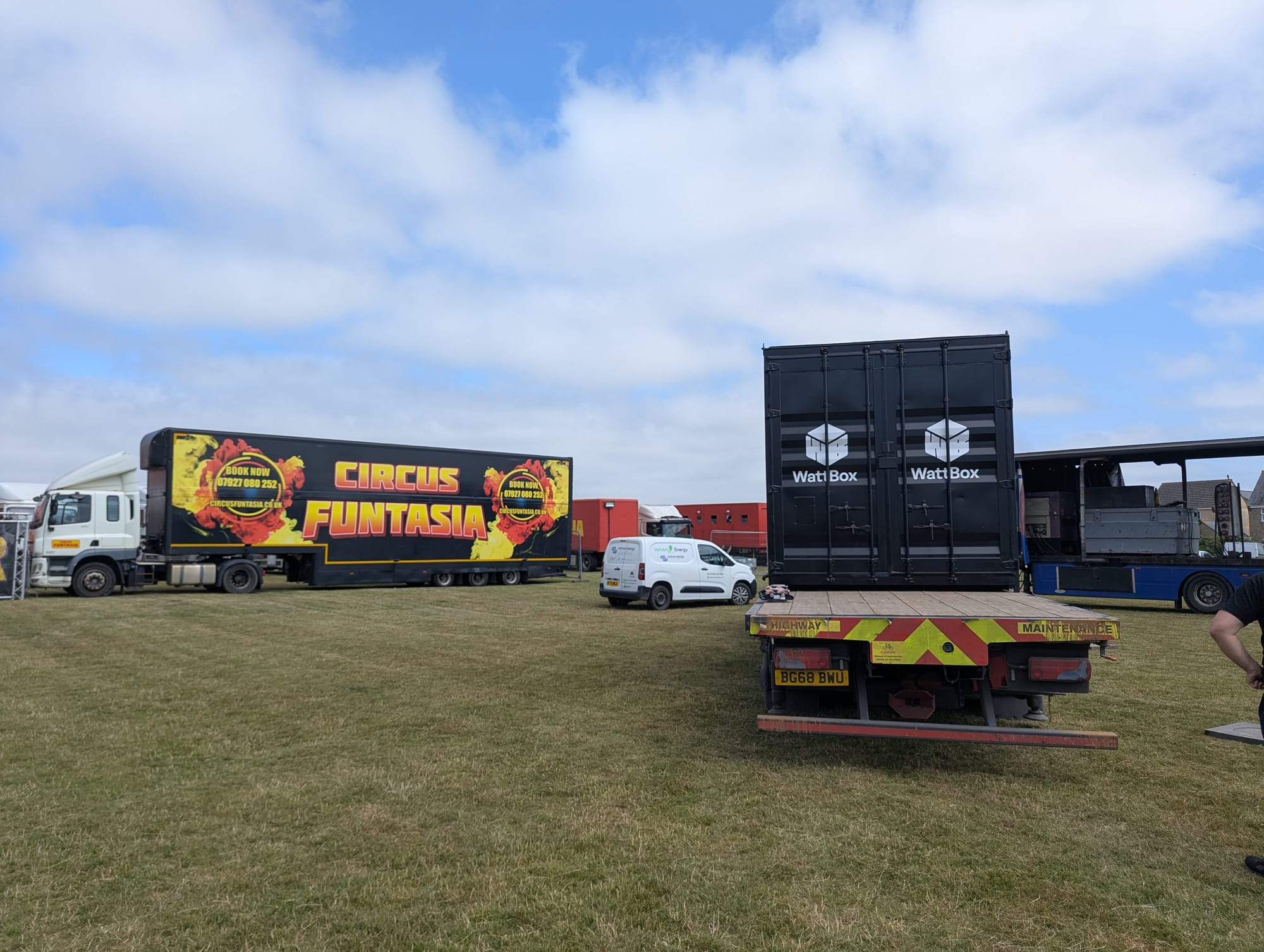
The Benefits of Battery Storage for Events and Touring Sites
Circus battery storage systems are super flexible & modular, reducing reliance on diesel generators, providing power that's virtually silent, and can cut operational fuel costs by a significant amount. By combining solar & battery storage, sites can achieve a 75% reduction in fuel consumption, enjoy the flexibility to deploy at short notice, and open up new venues that were previously off-limits due to noise or emissions worries.
What is Off-Grid Battery Storage for Events?
Circus battery storage refers to a flexible, mobile battery energy storage system that's designed to reduce reliance on diesel generators. These systems are built to be easily transported, set up, taken down & moved on to the next job, making them ideal for touring circuses, festivals, outdoor events & any short-term off-grid site.
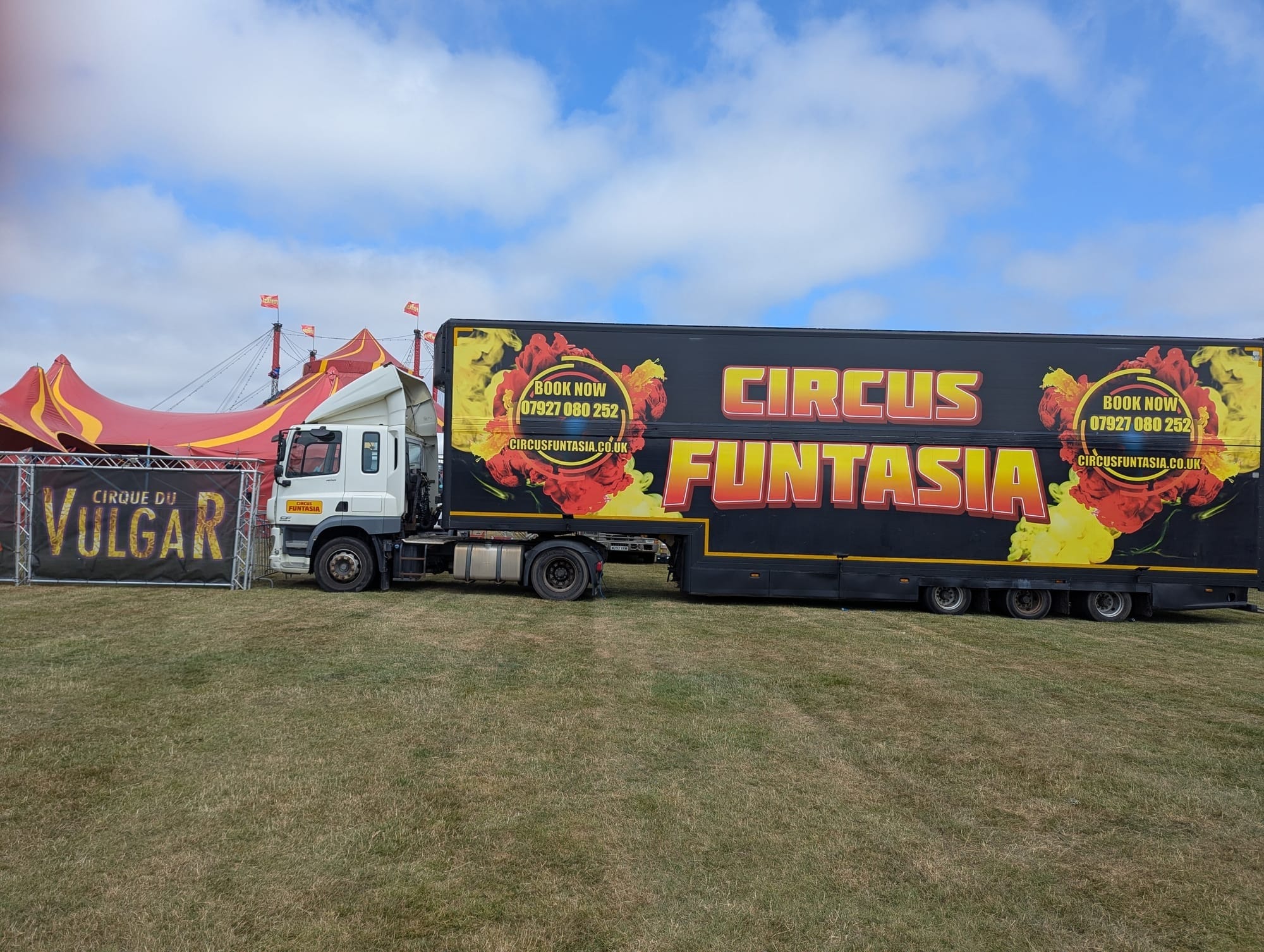
Who Circus Fantasia Are
Circus Fantasia UK is a travelling circus that's a member of the Association of Circus Proprietors of Great Britain. The show runs across the South West and Wales during the season, with each stop lasting anywhere from a week to four weeks before the whole operation packs up & moves on to the next town. The show itself runs for about two hours under a climate-controlled big top with a live orchestra - it's a real showstopper with acts ranging from death-defying acrobatics to mesmerising magic tricks.
Everything that the audience sees & a lot of the things they don't is powered by the energy the circus takes with them. There's no hook-up to a mains supply - no substation to speak of - whatever the site needs, they have to bring it themselves.
The Problem: A Generator That Never Stopped
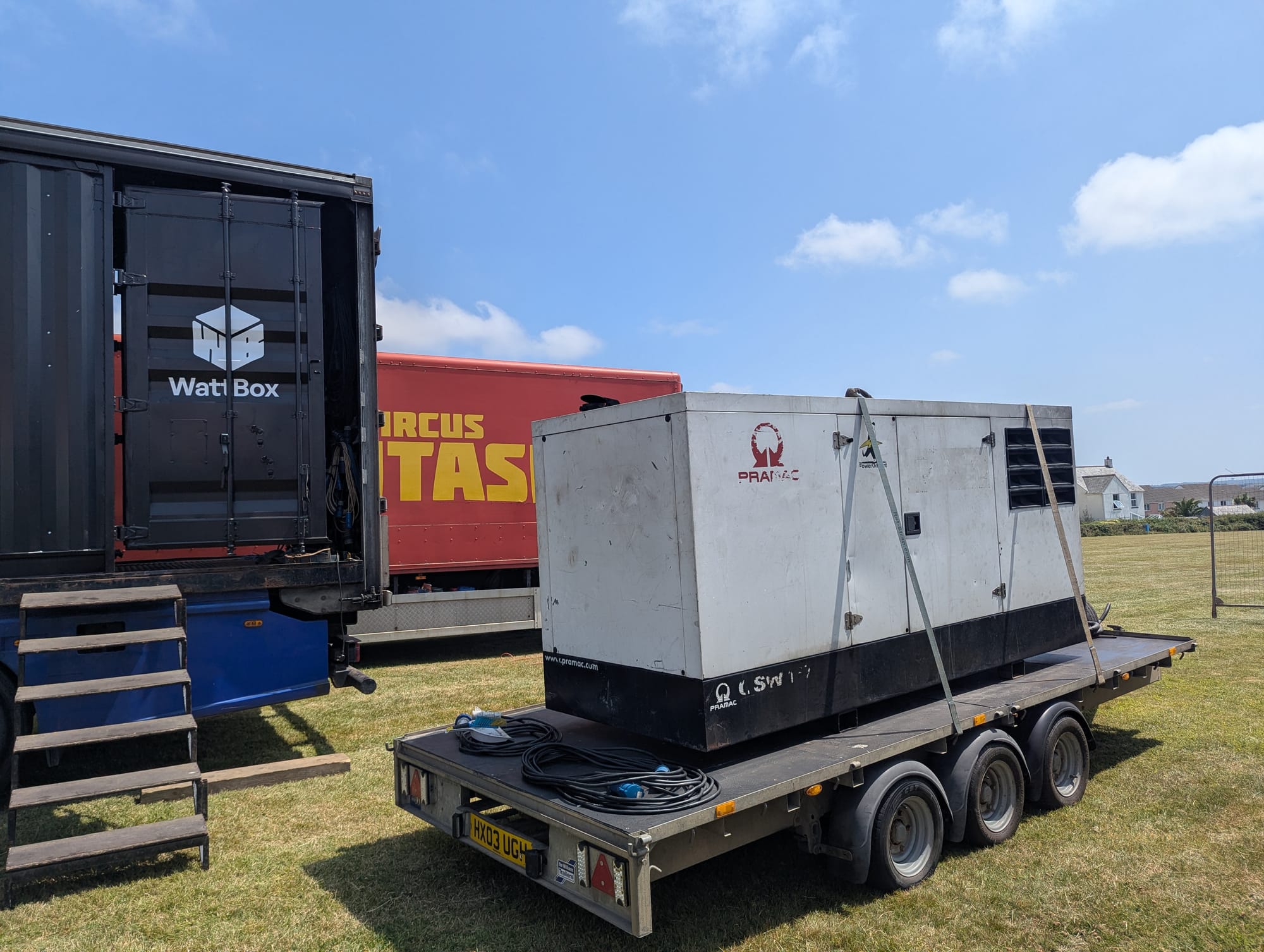
A circus on tour can't just plug into the national grid - it takes its own power with it, wherever it goes. For Circus Fantasia, that meant a diesel generator running 24/7 to keep the show on the road. And because some loads never stop, neither did the generator - it ran all through the night at every pitch, burning fuel to keep the lights on when it really didn't need to.
That created a triple whammy of problems - and they just made each other worse:
- Fuel Costs: A genset that's sized for a full-on show is way too big for a handful of overnight circuits, and running it that way is a pretty expensive way to get the power you need.
- Equipment Wear: Long hours at low load is the worst way to run a diesel engine - they just don't like it. They get worn out more quickly, need more maintenance & develop problems like "wet stacking", where unburnt fuel ends up in the exhaust system. The generator was being worn out doing the job it was least suited to.
- Business Threat: Circus sites tend to be close to housing because that's where the audience is - that means the diesel engine is running at 3am right outside people's bedrooms. And that's not what you want to be doing if you're trying to keep your neighbours happy. The complaints started coming in, and some local councils actually began to raise noise conditions that made it hard or impossible for the circus to keep running.
At this point, noise had stopped being just a bit of a nuisance - it was a major constraint on where the circus could go at all. No quiet power meant no pitch. No pitch meant no show.
Why a Big, Quiet Genset Wouldn't Cut It
The obvious solution would have been to get a bigger, quieter generator. But no - that just moves the problem, rather than solving it. A bigger genset would still burn fuel all night, and the noise would still be a problem.
Getting a grid connection is irrelevant if you're a touring show that's only at a site for a fortnight - and the cost & lead time of setting up a temporary supply at every stop would be way too much for any circus to handle.
A conventional containerised battery system was a step in the right direction, but it's based on a whole different set of assumptions - that this system would be stuck in one place for a decade, for example, and just left alone. This system had to be struck, transported, and rebuilt multiple times a season - by the circus's own crew.
The New System
The Basics
Circus battery storage is a flexible, mobile battery energy storage system that reduces reliance on diesel generators. The system that we built for Circus Fantasia includes:
- 300 kWh of battery storage on site
- 25 kW of solar, spread across the whole fleet
- 40 kW three-phase output
- 80 hours of generator runtime removed every week
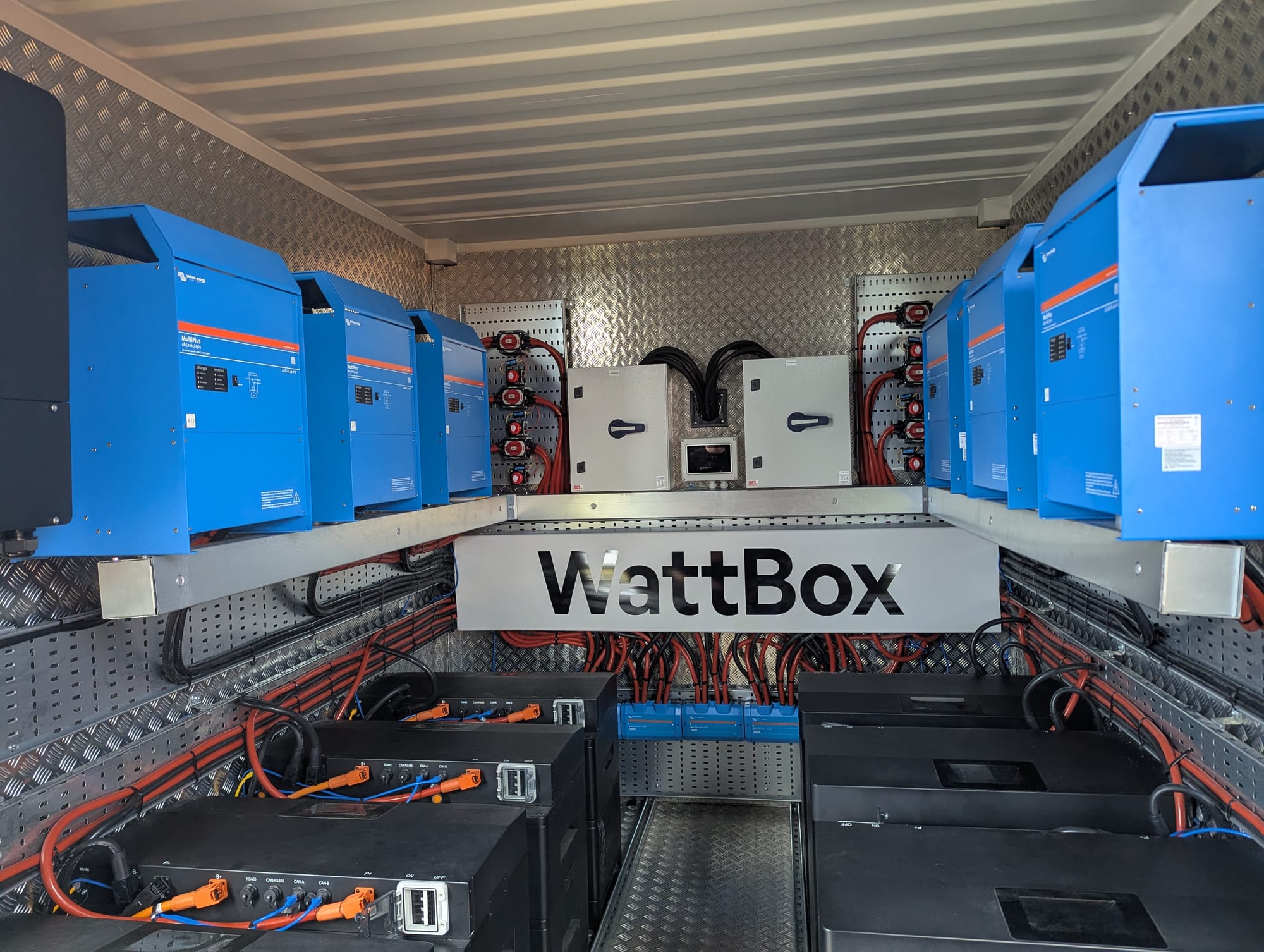
Battery storage systems use inverters to convert the DC power stored in the batteries into AC power that can be used to run standard site equipment & loads.
The Battery Storage Bit
- Capacity: 300 kWh of battery storage
- Output: 40 kW, three-phase (which is essential for powering heavy loads like motors, rigging, catering equipment and climate control)* Inverter Integration: Battery systems use inverters to convert stored DC power into AC power, giving instant power delivery to all site loads with no glitches in service.
Solar Array
- Solar Capacity: 25 kW, spread out across the vehicle roofs
- Deployment: We mounted the solar array on top of the circus lorries, using the space that was already available when they're towed around from town to town. This way the equipment comes with the circus and can be reconfigured quickly at each stop.
Generator Integration
- Hybrid Operation: The generator is still on site, but these days it only kicks in to top up the battery when needed, running at more efficient loads and during scheduled quiet time. This reduces generator noise and cuts fuel use dramatically.
Deployment and Mobility
- Demountable Design: The system is designed to be quickly disconnected, packed up and reinstalled by the circus crew, not specialist engineers.
- Quick Connections: All the connections are fast, with keys to make it hard to get them wrong, so the setup and teardown can be done at a pace.
- Flexible Solar Integration: The distributed solar can put up with different vehicle arrangements and varying levels of shading at each site, always seamlessly re-integrating into a single system.
- Durability: The battery and components are built to withstand the rigors of frequent transport and regular setup.
The Hard Part: It Had to Be Broken Down
Engineering for Mobility
A fixed battery installation gets hooked up once. But this one gets commissioned every few weeks, by circus crew rather than commissioning engineers, in a field often in the dark, and then gets on the road and done all over again.
Quick and Safe Connections
Connections had to be fast, with keys to make sure they get done right, because the people making them are riggers and drivers rather than electricians, and they're under the gun to get it done at the end of a long move.
Flexible Solar Integration
The distributed solar had to deal with the vehicles parking up in a different arrangement at every site, with different angles and levels of shading, and still plug into a single working system.
Durability and Scheduling
The battery itself had to withstand being towed around the country as routine rather than exception. The whole system had to be dismantled on the same schedule as the big top. If your power system holds up the circus, the crew will start to quietly dislike it, and a system that gets sidelined is one that often just ends up switched off.
The Results
We got some pretty impressive figures:
| Metric | Before | After |
|---|---|---|
| Generator Runtime | 16 hours a day | 4 hours a day |
| Diesel Consumption | 1680 litres/week | 420 litres/week |
| Fuel Cost per Month | £1176 | £294 |
| Servicing Interval | 2 months | a little over a year |
| Pitches with Noise Complaints or | 12 | 0 |
Most importantly, this means the circus can now take on sites that were previously off-limits.
What This Means for Your Site and Energy Costs
A circus is a pretty extreme version of a very common headache.
If you're in a similar boat - your site is temporary, there's no grid connection, you're close enough to people that noise is a factor, and you're relying on a generator that runs for too long because it's cheaper to just leave it going - then this approach is worth looking at.
Outdoor events, festivals and TV location units all face the same awkward mix of power demand, short tenancies, and noise limits that have to be adhered to. Construction compounds, fairgrounds, markets and remote sites all carry the same underlying pattern of short occupation, real power demand, and a noise constraint that is often seen as unavoidable.
It's not. Pairing battery storage with solar, and keeping a generator on site to recharge rather than do all the heavy lifting, gives you control over when you do make noise.
Frequently Asked Questions
Can a battery system really replace diesel generators at an outdoor event?
For most of the running time, yes. The battery provides power to the site directly and silently. What usually remains is a generator used to recharge the battery when solar isn't enough on its own, running for short scheduled windows rather than all the time. The result is not no diesel at all, but it is a hell of a lot less and, more importantly, you get to control when the noise happens.
How much battery storage does a site like this need?
It depends on how much load you've got during the night and how long it is between charging opportunities, rather than the peak demand. If we needed 40kW for peak demand but only 50kW of overnight load, for instance, then a lot less storage would be needed.
Can you charge a battery system from a generator?
Yes and that in itself is a key benefit rather than a consolation prize . A generator charging a battery runs at a solid, consistent load - just the way diesel engines like it best - not idling along at low capacity when they eat up fuel and wear down faster. And that means you can schedule all the generator's running hours into a neat little window when it suits you.
Is solar on the roof of the vehicles actually worth it then ?
In places where there's no buildings around, the vehicle roofs are the only big surfaces you've got to play with. But the downside is that the output from the solar array will be all over the place because its parked vehicles will always be in different spots. That means it's not as reliable as a fixed roof setup - unless you pair it with enough storage to even out the ups and downs. When you do that though, it really cuts down on how often the generator has to kick in.
What happens after a week of gloomy weather ?
The generator picks up the slack. Solar just makes it possible to cut down on how often you need to run the generator, rather than getting rid of the need altogether, which is why having a generator on site as a charger is actually a deliberate choice rather than a weakness.
How much time does it take to get everything up and running then ?
The power system was actually designed to slot in with the circus's existing setup and teardown routine, not slow it down.
We Can Help You Work Out What You Need
If you're running a temporary operation or an event that relies on a diesel generator as we speak, the first sensible step is to get a real handle on what your power needs look like in a full day - not just at the peak demand moment. Run our calculator to get a rough idea to start with, or get in touch if you want more info or a direct point of contact to chat it through.