
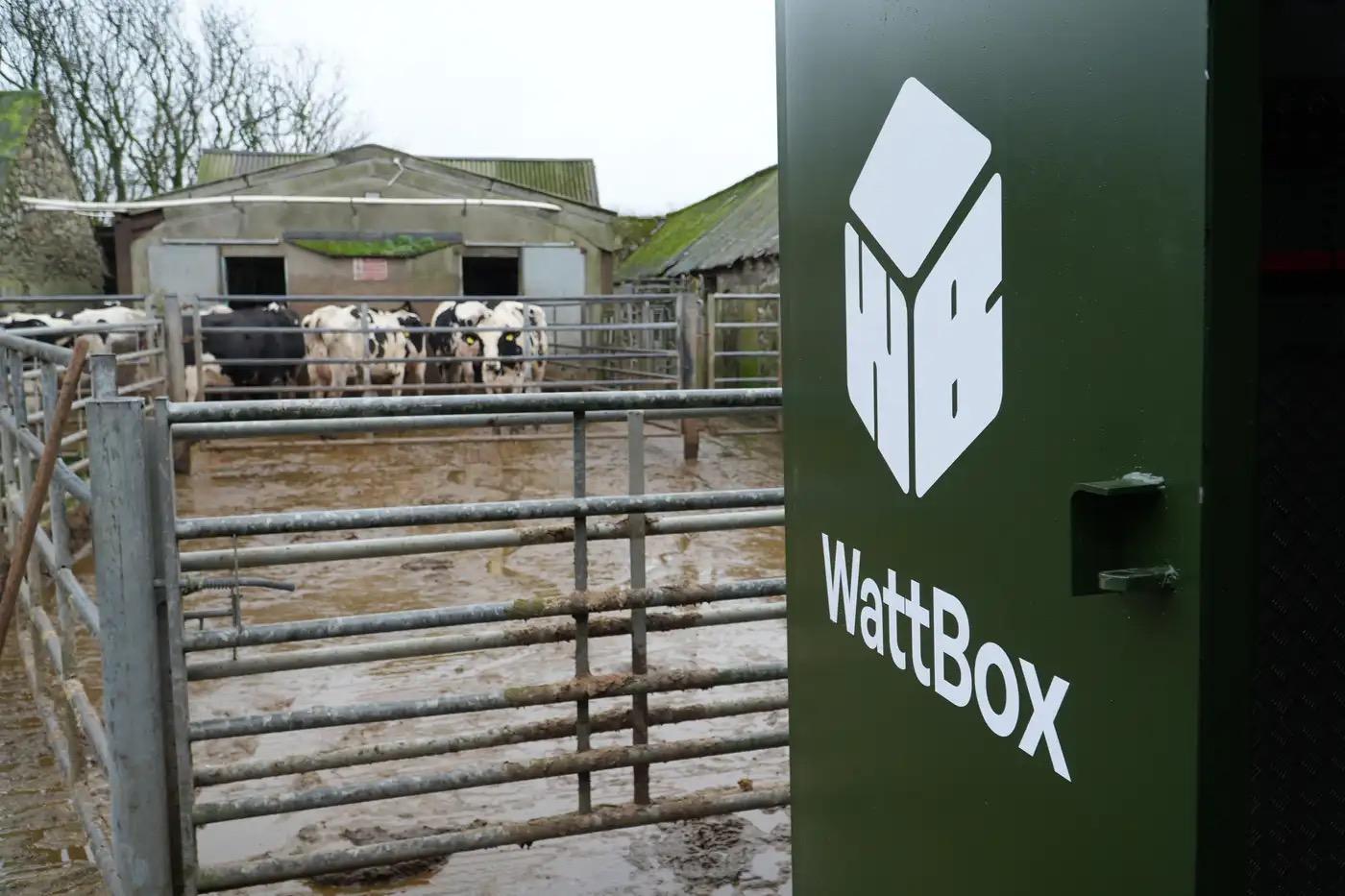
A WattBox container in a dairy farm yard with cows in the background

Backup power

The grid drops. You don't.

Solar and storage that keep the parlour, the fans and the fridges running when the power goes, and cut the bill every other day of the year.

See what it costs

What stays on

Milking

Parlour, vacuum pump and the bulk tank, twice a day, every day.

Ventilation

Shed fans that cannot stop for twenty minutes in July.

Refrigeration

Cold stores, milk tanks and the packhouse chillers.

Pumps

Water, slurry and irrigation, with no diesel standby to nurse.

How the switch happens

01

The grid fails

A storm, a fault down the lane, a planned outage nobody told you about.

02

The battery takes the load

In milliseconds. The lights do not flicker; the fans do not stop.

03

If it runs long, the generator starts

Only if you have one, only when the bank runs low, and at full load.
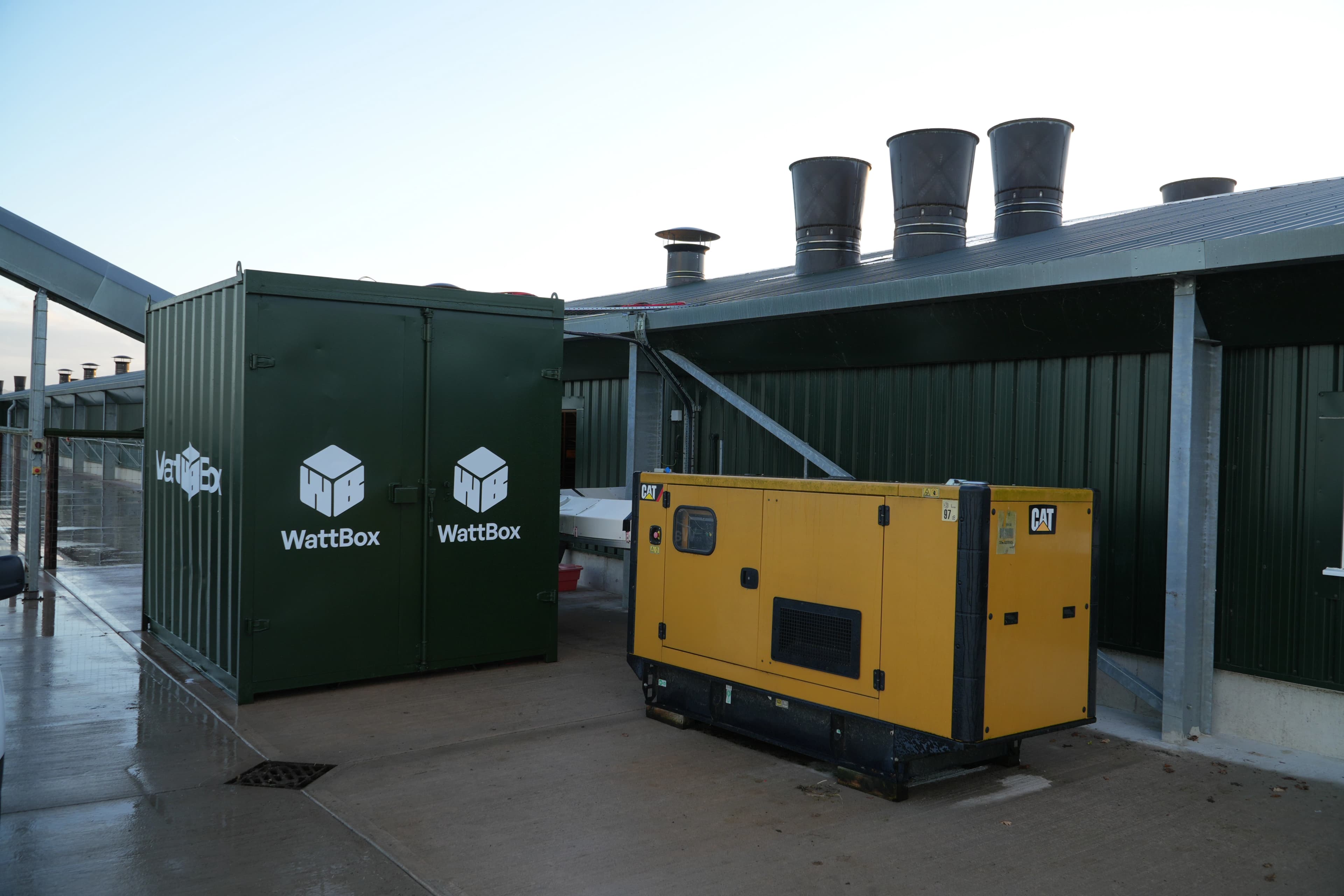
WattBox container installed beside poultry sheds in Shropshire
Project

Poultry unit, Shropshire

Two sheds, 32,000 laying hens, a three-phase 100 A supply at the end of the line. The fans are now the last thing on the farm that would notice a power cut.

100 kWp
Solar
128 kWh
Storage
32,000
Hens
100 A
Three-phase supply

For dairies, poultry units, cold stores and anything with a load that cannot stop.

Grid-tied or off-grid, for sites of every size.

How it works

  1. 01

    A 20-minute design call

    An engineer, not a salesperson. You leave with a price band.

  2. 02

    Feasibility from your meter data

    Your half-hourly readings, not an estimate. Sizing, saving and payback before anyone visits.

  3. 03

    Install

    We file the G99 the day you sign and design to your export limit.
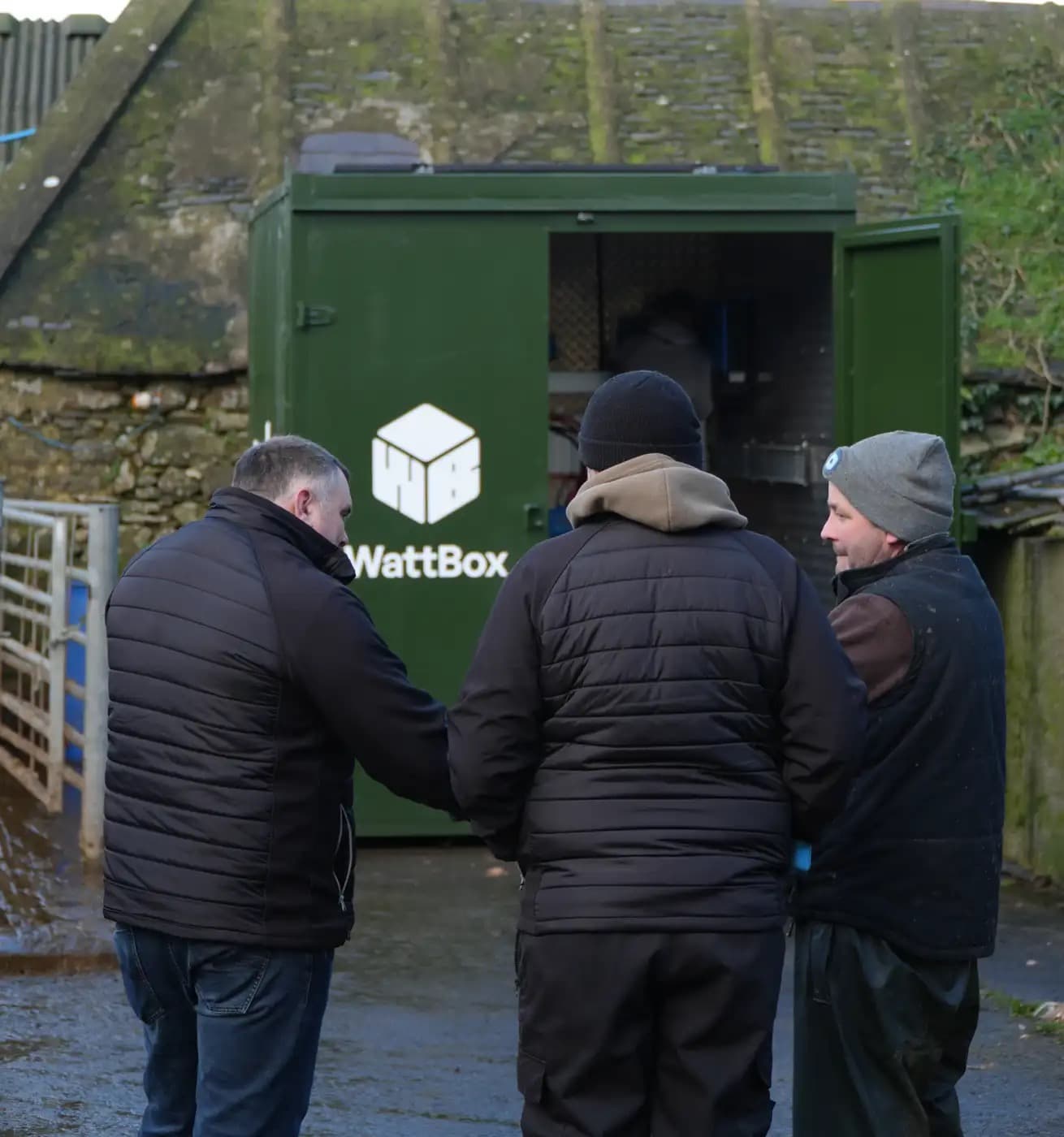
A WattBox engineer talking with a farmer in front of a container
Common questions

Straight answers

Will it REALLY save that much?
Yes — and we show you the numbers before anything goes ahead. Farmers are right to be cautious. A lot of solar salesmen have over-promised in the past. WattBox is different because: • We model your real load profile, not generic estimates • Savings come from tariff differences (cheap → expensive), not optimistic solar assumptions • Even without new solar, you save simply by charging off-peak and avoiding peak rates • We don't proceed unless the numbers stack up for your farm If it won't save you money, we tell you upfront.
Will it handle my peak loads?
Yes — we size the WattBox specifically around your biggest load events (milking, cooling, ventilation, pumps). We look at: • Peak kW demand • Duration of high-load windows • Motor start currents • Existing solar/export patterns WattBox units come in multiple sizes (40–200+ kWh), and we only recommend a system that can comfortably handle your peaks. If it won't cope, we simply won't sell it to you.
How do I pay for this?
Either up front or via a financing loan, splitting the cost up over 5 years. This keeps the monthly cost lower than the monthly savings, meaning the system pays for itself from day one. We can point you towards lenders who understand agricultural energy projects, or you can use your existing bank. No big upfront hit. Just a steady monthly cost covered by the savings.
What about maintenance? What if it breaks during milking?
WattBox uses industrial-grade Victron hardware, built for continuous operation in tough environments. • No moving parts • Remote monitoring 24/7 • Alarms and early-warning notifications • Most issues can be diagnosed remotely • On-farm components are modular and easy to service If something ever did fail, your farm wouldn't go offline — the system automatically falls back to grid power. In the off chance there is a problem, an engineer will be sent out within 24 hours. WattBox never interrupts your operations.
Is the DNO going to block it?
Almost always: No. Battery systems don't increase your maximum demand, so they're normally straightforward for DNOs to approve. If you already have solar, this is even easier — the paperwork is similar and we handle it for you. And if export isn't required, it's even simpler. We take care of the DNO process end-to-end.
Is the install complicated? Will my farm be offline?
Installation is done outside your core operating hours. Most installs take 1–2 days and require no shutdown of equipment. • No digging or trenching • No rewiring of the whole farm • No disruption to milking or cooling • System sits outside in its own enclosure We plan the install around your timetable so nothing stops running.
Can I claim this against the Annual Investment Allowance (AIA)?
Yes — WattBox qualifies for the Annual Investment Allowance (AIA). That means you can deduct the full cost of your WattBox from your taxable profits in the year you buy it, up to the current AIA limit (£1 million for most businesses). This can significantly reduce your tax bill and improve the payback even further. Speak to your accountant to confirm how AIA applies to your specific situation.